When the clocks go back, many of us look forward to cosy autumn evenings and an extra hour in bed. But if you have a baby, toddler or preschooler, you might be wondering what the clock change will mean for your child's sleep.
In the UK, the clocks go back by one hour at 2am on Sunday 25 October 2026, when 2am becomes 1am.
While the clocks change instantly, your child's body clock may take a little longer to catch up. Earlier waking, tiredness at a different time and darker mornings can all take some getting used to.
The good news is that a few gentle changes can help make the transition a little easier.
How does the clock change affect children's sleep?
Young children's sleep is influenced by their body clock, light and their everyday routines. When the clocks change, those familiar timings suddenly look different.
For example, a child who usually wakes at 6.30am may initially be ready to start their day when the new clock says 5.30am.
Some children adapt quickly, while others may need a little longer to settle back into their normal routine.
How to prepare your child for the clocks going back
If your child has quite a predictable sleep routine, you could begin making small adjustments before the clocks change.
Rather than suddenly moving bedtime by an entire hour, some children's sleep guidance recommends gradually shifting bedtime, naps and other parts of the day later in small increments.
You could try:
- moving bedtime a little later over several evenings
- gradually adjusting naps and mealtimes too
- keeping your child's bedtime routine consistent
- following their usual tiredness cues
- getting outside and enjoying natural daylight during the day
And if the clock change catches you by surprise? Don't worry. You don't have to adjust beforehand, and some children will settle into the new timings naturally.
Keep your child's bedtime routine familiar
Familiarity can be reassuring when routines are changing.
Keep the parts of bedtime your child knows and enjoys, whether that's a warm bath, brushing their teeth, putting on their pyjamas, choosing a favourite bedtime story or having a cuddle before saying goodnight.
If their bedtime isn't perfect for a few days, that's okay. Give them time to find their new rhythm.
Get outdoors during daylight hours
As autumn arrives and the days become shorter, it's still important to make the most of time outdoors.
Light is one of the factors involved in our body's sleep-wake rhythm, making daytime outdoor activity particularly relevant when routines are changing.
And there's lots for young children to discover in autumn.
Go on a family walk, collect colourful leaves, hunt for conkers, notice how the trees are changing or simply pull on your wellies and enjoy some fresh air.
Make darker mornings an adventure
The clocks going back also mean darker evenings and a change in when daylight arrives according to the clock.
For children, that difference can feel enormous.
Instead of making the darkness something to worry about, try turning it into something to investigate.
On the way to nursery, ask:
- Can you see the moon?
- Can you spot any stars?
- What colour is the sky this morning?
- What sounds can you hear?
- Which animals do you think are awake at night?
Even an everyday journey can become an opportunity to explore the changing seasons.
What if my child is scared of the dark?
For some children, darker mornings and evenings can feel unfamiliar or a little worrying.
Give your child opportunities to talk about how they鈥檙e feeling rather than simply telling them there鈥檚 nothing to worry about.
You could take a torch into the garden together, make shadow shapes on the wall, look for the moon or talk about the animals that come out at night.
Books and play can also be lovely ways to start conversations about the dark and make it something to explore together.
Children's books about the dark, night-time and bedtime
Sharing stories can turn the darker evenings into something special.
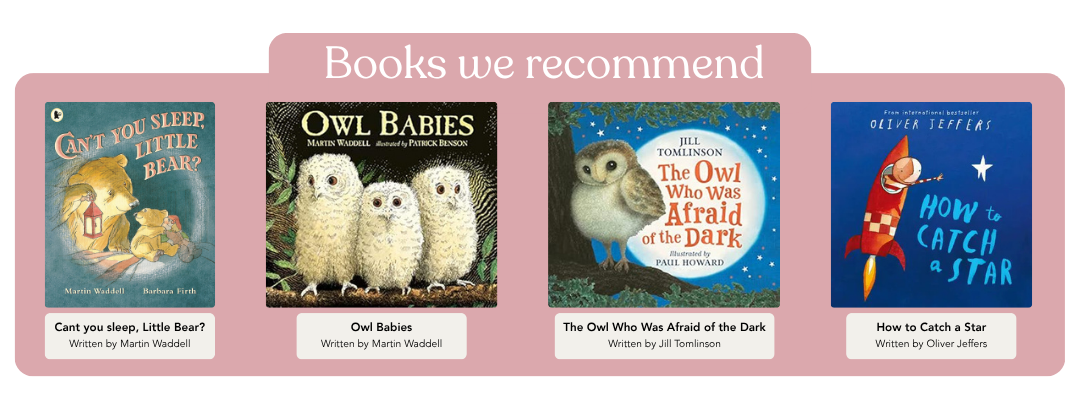
You can take the learning beyond the story too.
After reading about owls, discover some other animals that come out at night. After a story about stars, look out of the window together and see what you can spot.
It's a simple way to encourage the curiosity, language and exploration that are so important during the early years.
Turn the dark into an adventure
To help make darker evenings feel a little more fun and familiar, we鈥檝e created a for you and your child to enjoy together.
Filled with simple activities you can try at home, your little explorer can:
馃敠 Go on a torchlight adventure and see what they can discover.
馃宠 Look at the night sky and draw the moon, stars and clouds they spot.
馃 Discover which animals are awake at night, from owls and bats to hedgehogs and foxes.
馃 Have fun with shadow play, using a torch to make shapes and shadow creatures.
Most importantly, enjoy exploring together. There鈥檚 no right or wrong way to complete the activities. Let your child lead, ask questions and see where their curiosity takes you.
Give your child time to adjust
Above all, remember that every child is different.
Your Child might wake earlier, become tired sooner or want meals at slightly different times while they adjust. Another child may barely notice that anything has changed.
Keep familiar routines where you can, enjoy plenty of daylight and outdoor play, and follow your child's cues.
And while those dark autumn mornings might mean an earlier start for parents, for children they can also mean moon spotting, torch adventures, cosy bedtime stories and a whole new season to explore.
Looking for a nursery where your child can learn, explore and grow? Find your nearest 91桃色破解版 nursery.
鈥�